5 Scary Habits Young Hockey Players Pick Up (And How to Fix Them)
Bad habits can haunt your hockey game
While young hockey players like to fill their bags with treats like goals, assists and saves, there can also be plenty of scary tricks, if the wrong habits are developed. Many things can haunt a hockey player—missed passes, having the puck stolen, missing an open net, or letting a muffin sneak by for a goal—these are all nightmarish scenarios for a young player, and are things that will inevitably happen on the ice on occasion. The biggest problems arise when these mistakes pile up and become habits. Young players can train to minimize these ghastly habits by working off the ice with targeted training techniques.
Simple training drills, done consistently, can form long-term habits that help young hockey players become smarter, more efficient performers on the ice.
What are the 5 scariest hockey habits?
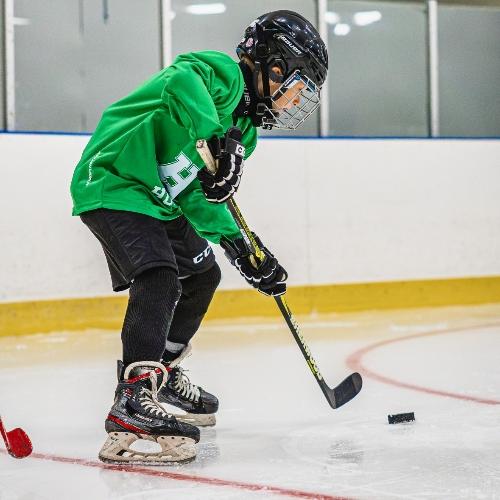
1. The Head-Down Stickhandler
The habit: Staring at the puck instead of scanning the ice
Young players that haven’t built a strong, confident feel with the puck on their stick, tend to look down at the puck while skating. While this is a natural instinct for beginner and novice players, this long-term habit can have dire consequences as the game speeds up, players become more assertive, and when checking is introduced at a more advanced age..BOOM!. Working to resolve this habit as early as possible will not only help the skater be safer and more confident on the ice, it will also lead to stronger understanding of the game. The player will be better suited to read the game in front of them, including the movement of the opponent, identifying passing lanes, read teammate spacing, and better anticipating offensive opportunities.
How to fix it:
- The more your player can practice handling the puck on their stick, the more comfortable and confident they will become. This may be as simple as stickhandling a wooden ball around the house casually, or taking 10-20 minutes per day to stickhandle on a surface while walking or moving around. Doing these drills while moving around is key, as stationary stickhandling doesn’t build the habit of handling while in motion nor does it help with the idea of processing and scanning the environment with the puck on your stick.
- Handling the puck while keeping your head up isn’t easy or natural, especially for younger players. It should be taught and practiced as a specific skillset. One way to do this is to have your hockey player stickhandle the puck while presenting them with information in front or around them that they must process and answer. For example, simple math cards while stickhandling should force the player to scan and think while keeping the puck on their stick.
- DanglePro from NHL Sense Arena is a mixed reality game that forces players to pick their heads up while avoiding obstacles or completing gamified tasks. This is a fun way to teach habits in a way that doesn’t feel like “practice”, but rather is played like a game to achieve points and win levels. Working DanglePro drills into a young player’s off-ice training regimen in short 10-15 min daily sessions can build the confidence and habits over time, while keeping training fun and exciting.
2. The One-Player Show
The habit: Trying to dangle around every defender instead of looking to make a pass.
Young players often become enamored with making a spectacular individual play, without considering their teammates or other opportunities on the ice. While scoring goals feels great in the moment, sometimes the best plays are the ones that lead to a goal, or help prevent a scoring opportunity on the other end.
How to fix it:
- First and foremost, young hockey players should understand that hockey isn’t just about scoring goals—It’s a team sport that relies on collaboration on the ice. To best gain this perspective, young hockey players should watch hockey played at a higher level, with specific instruction to notice things that are happening in other places than the puck handler. Watch what the weakside winger is doing, how defensemen move to position for the best outcome, or how goalies follow the puck. Watching more hockey, and thinking about why certain things happen away from the puck, may help develop a broader understanding of the game.
- Don’t just praise goals. Young players will behave according to what they interpret to be the most appealing outcomes, especially those that generate the most rewards. Parents and coaches often focus predominantly on goals without recognizing the important plays that lead to those goals. Acknowledging off-the-puck plays, effort, passes and good teamwork will help develop a more well-rounded player. Additionally, encouraging young players to praise a great pass, defensive play, save or off-puck play with their teammates can spread these behaviors.
- NHL Sense Arena’s Playmaker Mode is designed to train players to scan the ice and consider all options, not just skate and shoot. With these reps, young players in particular are taught to scan and think about the best options based on what’s happening around them on the ice. Training this inside the headset will lead to more consideration on the ice and overall better, more thoughtful habits.
3. The Blindside Surprise
The habit: Retrieving pucks without checking your surroundings first.
Young players that are receiving a pass or retrieving a puck often only focus on getting the puck and maintaining possession immediately. However, part of this process should be understanding what’s around them, and anticipating what their next move will be as soon as they get the puck. Pre-scanning the ice and shoulder checking are ways to accomplish this. Failing to do these small behaviors can leave players unaware of forecheckers, teammates, open ice, and available exits.
How to fix it:
- Players need to develop the habit of looking over their shoulder before reaching the puck, when safe, and using that information to plan their next play. Practice shoulder checks and puck retrievals in controlled drills by passing the puck and asking the player to first look around and notice things in the room or area, especially behind them. Playing a game of “Eye Spy” before passing a puck can be a fun game that also builds these habits.
- Teach players to verbalize their next movement when retrieving a puck or accepting a pass. This can just be in practice but by saying out loud their next move, they are forcing themselves to be highly intentional and thoughtful about where they are going next, and why. Coaches can teach this with a drill that specifically asks players to call out where they are going next. Things like “PASS TO D PARTNER”, “SKATE TO SPACE”, “BUMP TO THE CENTER” or “PROTECT THE PUCK” can develop this habit in a practice setting.
- Playmaker Mode again has drills that address this type of behavior specifically. It asks players to find space without the puck, and makes players think about the complete ice spacing, not just what’s right in front of them.
4. The Frozen Zombie
The habit: Standing still when you don't have the puck.
Young players often think that if they don’t have the puck, then they’re not involved in the play. So, they wait for the puck to come to them, or look to chase the puck. What they need to understand is that the majority of the game will happen around them when they don’t actually have the puck on their stick. Movement off the puck is just as important as skating with the puck, and can lead to even more opportunities to make plays.
How to fix it:
- Teach players to find open ice, change their position as the play develops and give the puck carrier a useful passing option. Talk to them about what open space looks like, what their positional role is, how to communicate effectively, and how to scan the ice to look for opportunities.
- Watch film playback and discuss options with your player. This may be for slightly older players, but sometimes showing them actual plays and their movement can lead to a greater understanding of missed opportunities. Without scolding, watch playback from a recent game and ask your player what some other options may have been in certain situations, or discuss overall spacing on the ice that could lead to better outcomes.
- Playmaker Mode again has drills that address this type of behavior specifically. It asks players to find space without the puck, and makes players think about the complete ice spacing, not just what’s right in front of them.
5. The Goalie Who Gives Away the Net
The habit: Playing too deep or failing to manage shooting angles.
Shooters look for open areas of the net on which to shoot. Goalies, on the other hand, should minimize the “open space” of the net to reduce scoring options. The best way to do this as a goalie is to cut down angles and reduce areas of interest for shooters.
How to fix it:
- Work on positioning relative to the puck and net, depth control, squareness and adjusting as the play develops. Show goalies what it looks like as a shooter approaching the net in different situations and discuss with them ways to cut down on the score-able areas.
- Work with your goalie on the ABC’s of Depth and commit to memory what these mean, and when to employ each.
- Use NHL Sense Arena’s “G.A.P” (Goalie Advancement Program to work specifically on Angles and Box Control. These progressive training drills work from the initial foundational elements to more advanced strategies while also resulting in shots to keep your goalie engaged.
- Additionally, NHL Sense Arena allows for full 3-D Replays, letting goalies see themselves from the shooters perspective and from multiple angles. Goalies can use this to see how their angles are in relation to the puck carrier and the shot.
- Finally, NHL Sense Arena’s Box Control view shows the specific perspective lines that indicate whether a goalie is on their angle or not. This can build successful habits through unlimited reps and shots in VR.
Break bad habits before they become permanent
Habits are formed because players often instinctively do something, or are even rewarded for a specific behavior, and are subsequently never taught to re-learn a different behavior. Importantly, habits are hard to break. To do so, they must first become aware of the behavior, then find specific course-correcting actions, followed by significant and intentional reps to break the bad habits. The most important part of this process is the reps—as many as possible, as consistently as possible.
Here are the three core principles to breaking and re-forming bad habits.
- Help players identify situations where the mistake happens, using coaching feedback, game video or self-reflection.Recognize the habit.
- Use focused drills and game-like situations to reinforce better habits, starting without pressure and progressing to more challenging scenarios.Practice the better decision.
- Encourage regular practice and celebrate small improvements rather than expecting instant results.Repeat, reflect and improve.
Don't let bad habits haunt your game
Every hockey player develops bad habits either through lack of competition, complacency or even summer hockey! What matters is learning to recognize them and putting in the work to build better ones. Doing this at a young age can create stronger hockey players at younger ages, as the bad habits have less time to become entrenched. Ultimately, better behaviors lead to stronger performance and opportunity in the long-term.
Remember, improving hockey IQ, awareness and fundamentals doesn't always require additional ice time. Even short, consistent off-ice sessions can help players practice important skills.
Don't let bad habits haunt your game this season. From heads-up stickhandling with DanglePro to smarter decisions in Playmaker Mode, NHL Sense Arena gives young players new ways to practice the skills and habits that matter on the ice. Train smarter, play faster.