

How to Level-Up Your Hockey IQ in 2026
Hockey IQ is about reading the game before it happens, not just making plays.
For players, that means scanning, spacing, and decision-making under pressure.
For goalies, it means anticipation, angle management, release recognition, and understanding how plays develop before the shot.
As we head into 2026, the fastest way to gain an edge is to train how you see and think the game, whether you’re attacking or defending the net.
What Hockey IQ Really Means (Players vs. Goalies)
Hockey IQ looks different by position, but the foundation is the same:
For Players
Pre-scanning before receiving the puck
Reading pressure and identifying outlets
Understanding spacing, timing, and options
Making quick, confident decisions
For Goalies
Reading rushes and offensive patterns
Anticipating shot location and release points
Tracking threats away from the puck
Understanding defensive structure and breakdowns
High-IQ goalies arrive early, mentally and positionally.
Start With a Hockey IQ Checklist (By Position)
One of the biggest mistakes both players and goalies make is training without a clear focus.
Using position-specific hockey IQ checklists helps:
Players identify scanning and decision habits
Goalies track reads, depth, and situational awareness
Everyone measure improvement beyond stats
Examples:
Did I scan before touching the puck?
Did I recognize pressure early?
Did I read the play before the shot or pass?
Did I stay composed when the play broke down?
Checklists turn awareness into habits, and habits into performance.
Build a Simple Hockey IQ Routine Between Games
You don’t need hours. You need consistency.
A strong routine (players and goalies) can make the difference by creating consistent training and creating habits and behaviors. Read our hockey IQ training checklists to help guide your routine.
Players should focus on:
Reading defenders
Identifying options early
Executing under pressure
Goalies should focus on:
Rush recognition
Shot selection and release cues
Rebound control decisions
Managing chaos around the crease
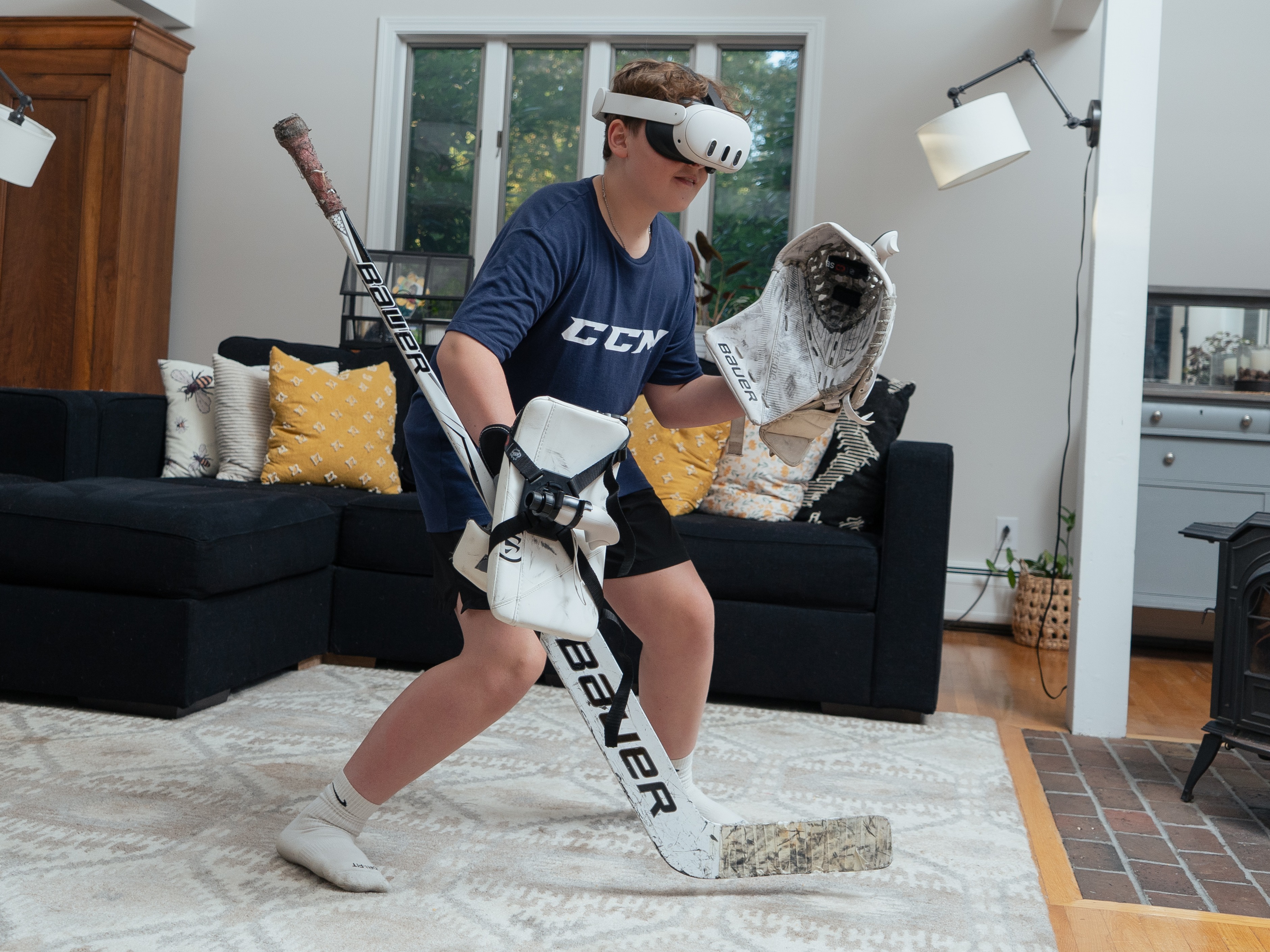
This is where off-ice and VR training becomes a huge advantage. NHL Sense Arena allows both players and goalies to:
Train game situations without ice time
See plays develop from realistic perspectives
Repeat situations that are hard to recreate in practice
Mental reps create calm under pressure for any position.
Pre-Game Warmups: Prime Your Hockey Brain
Warmups should not only wake up your body, but they should also sharpen your mental readiness.
For Players
Emphasize scanning and puck awareness
Rehearse quick decision-making
Visualize common in-game situations
For Goalies
Lock in visual tracking (priming)
Mentally rehearse rush patterns and releases (visualization)
Focus on calm positioning and controlled movement
Even 5–10 minutes of cognitive prep before a game can help both players and goalies feel the game slow down once the puck drops.
Offseason & Vacations: Maintaining and Protecting Your Hockey IQ
Time away from the rink doesn’t have to mean losing your edge.
For Players
Maintain puck-reading and decision speed
Stay mentally sharp without physical burnout
For Goalies
Keep tracking and anticipation sharp
Maintain confidence and timing
Avoid the “rust” that shows up early next season
Off-ice hockey IQ training lets goalies stay connected to the game without overloading their bodies, which can be a critical balance for long-term development.
Watch More Hockey (Watch It Like a Goalie, Too)
Watching hockey can build IQ when done intentionally.
Players should watch:
How elite players create time and space - how do they work to create opportunities for teammates
What they do before receiving the puck - movement off the puck
How they adjust under pressure - what do players do to calm the puck down or create positive plays in chaos
Goalies should watch:
Shooter body language - how it affects the shot release and trajectory
Release points and deception - how do shooters use deception and how can goalies anticipate
How plays evolve off the rush vs. in-zone - what is happening off the puck that affects rushes and shot opportunities
How goalies manage traffic and rebounds - how do goalies work through screens for best vision of the shot
Try watching the same sequence from both perspectives, as it builds deeper game understanding for everyone.
Talk Hockey With Coaches, Parents, and Teammates
High hockey IQ players and goalies like to think and talk about the game. Deeper conversations lead to different perspectives and better analysis. Communicating in real time creates more relevant discussions, while reflecting or reviewing the bigger picture helps build strategic thinking.
Players might ask:
- “What read worked or didn't work here? What was the right play?”
- “What’s the first option in this situation?”
- "How did our positioning or general approach help or hurt our performance?"
Goalies might ask:
- “What are my cues on this rush?”
- “How should I have played this based on our defensive coverage?”
- "Was my positioning appropriate and effective on this opportunity?"
For parents:
Focus conversations on decisions and reads, not just goals or saves.
For teammates:
Sharing what you’re seeing builds trust, chemistry, and collective hockey IQ.
Set Clear Hockey IQ Goals for 2026
Define success beyond stats.
In-Season Goals
Faster decisions (players) - Making more passes and better decisions that lead to stronger opportunities and points
Earlier reads and calmer movement (goalies) - Save % and goals allowed
Consistency shift-to-shift or shot-to-shot - reflect on shifts and how many positive plays were made
Offseason Goals
Maintain feel for the game - stay sharp
Improve anticipation and recognition
Build confidence heading into next season and in tryouts
Long-Term Goals
Earn trust from coaches - talk to coaches about things you can work on off the ice
Feel the game slow down - how confident do you feel
Become a reliable, composed presence — skater or goalie
Hockey IQ is measured in calm, confidence, and consistency.
Make 2026 the Year You Train Your Hockey IQ Intentionally
The best players and goalies don’t rely on luck or talent alone. They train how they see the game.
By combining:
Position-specific hockey IQ strategies
Consistent routines and training tactics
Smarter, more intentional warmups
Strong offseason habits
Targeted tools like NHL Sense Arena
You’re building a smarter, more complete hockey player or goalie for 2026 and beyond.
The edge isn’t just how hard you train.
It’s how well you see the play.