

Top Hockey Stickhandling Training Tools and Methods: Pros and Cons
There is no single perfect stickhandling training method. Every tool develops different skills, and the best option depends on what a player is trying to improve.
Some methods focus on puck touches and coordination. Others emphasize passing and shooting. Meanwhile, newer technology-based solutions can help train awareness, scanning, and decision-making alongside stickhandling.
Understanding the strengths and limitations of each approach can help players build a more effective off-ice training routine.
1. Cones, Obstacles, and DIY Stickhandling Setups
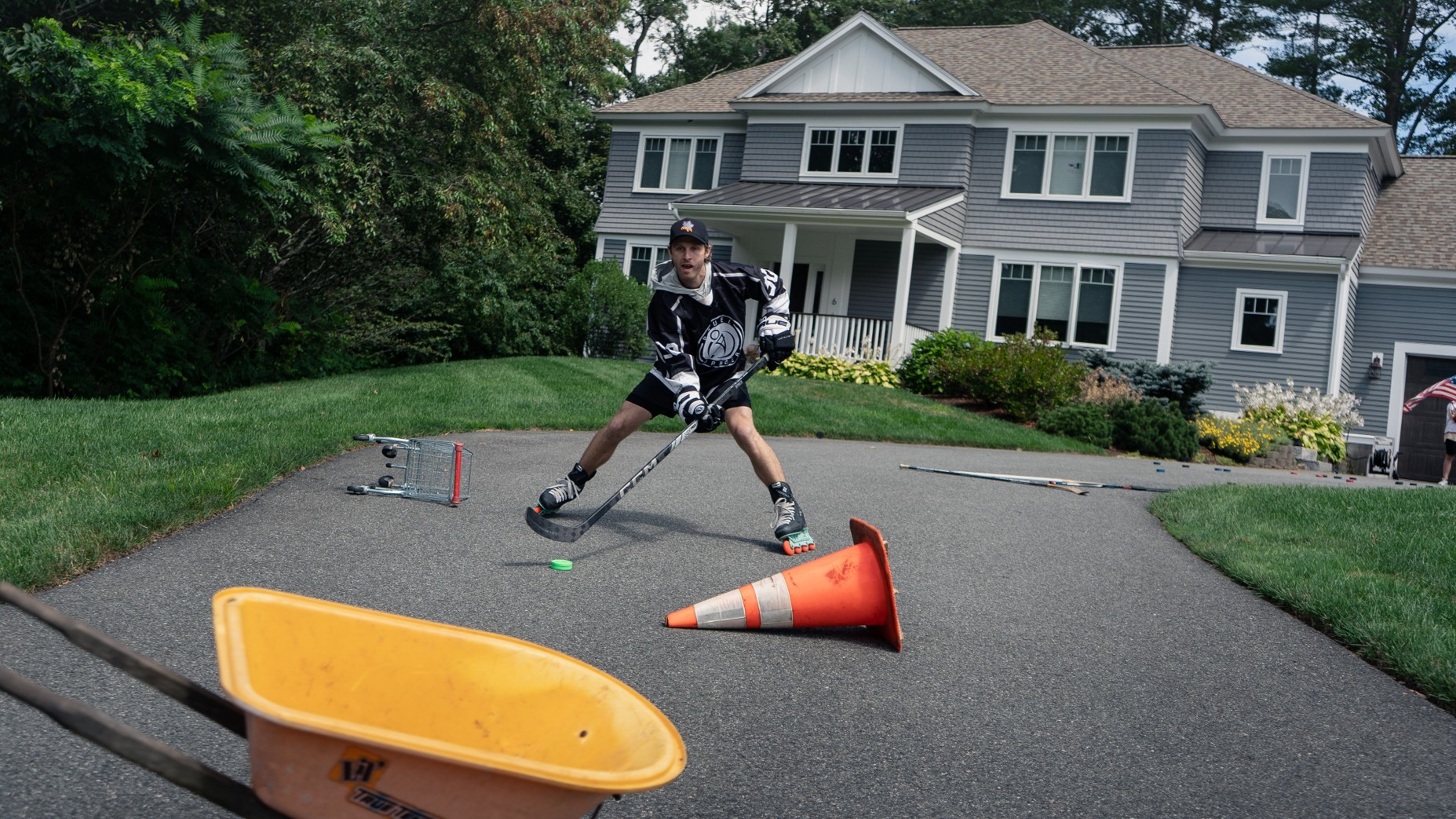
For decades, players have used cones, pucks, sticks, gloves, or household objects to create stickhandling courses in garages, basements, driveways, and shooting pads.
Pros
Extremely affordable
Easy to set up with equipment many players already own
Unlimited creativity and drill variations
Portable and usable almost anywhere
Effective for building basic puck control and hand speed
Cons
Obstacles never react or move
Repetition can become predictable over time
Does not train anticipation or decision-making
Provides no performance feedback or progression tracking
Encourages players to memorize patterns rather than react to changing situations
Best For
Players looking for inexpensive puck-touch reps and basic stickhandling development.
2. Smart Hockey Board Training Tools
Electronic stickhandling boards combine physical puck handling with sensors, scoring systems, and gamified challenges. These systems typically challenge players to move a puck through designated areas while tracking speed, accuracy, and completion times.
Pros
Makes training more engaging through games and scoring
Provides measurable performance feedback
Encourages repetition through challenges and competition
Can help players stay motivated during solo training
Cons
Expensive initial purchase, especially given the lack of updates
Most drills occur on a fixed playing surface
Limited variety of drills and challenges compared to open-ended training
Players often spend significant time looking down at the puck, potentially building bad habits
Training scenarios can become repetitive after extended use
Primarily develops puck control rather than broader game skills
Best For
Players who want somewhat gamified training with stickhandling reps at home, with little variety of skills and challenges.
3. Heads-Up Light and Reaction Systems
Technology-based reaction trainers use lights, visual cues, or interactive targets to encourage players to keep their heads up while handling the puck. These systems attempt to blend stickhandling with reaction training and visual processing.
Pros
Promotes heads-up puck handling habits
Improves reaction speed and visual awareness
More dynamic than static obstacle drills
Helps players break the habit of staring at the puck
Cons
Often requires a larger training area and more professional setup
Setup can be time-consuming, complicated, and unreliable
Multiple components can reduce portability (typically used in only one place due to breakdown/setup and size of space)
Training sessions may require additional equipment management
Usually focuses on reaction training more than complete hockey situations
Drills focus only on looking directly ahead, vs scanning or full spacial awareness
Best For
Players looking to improve heads-up puck control and reaction without needing 360-degree awareness or movement.
4. Passing and Rebound Training Systems
Passing trainers, rebounders, and return-pass systems are designed to develop receiving skills, catch-and-release shooting, and hand speed.
Pros
Excellent for passing and receiving development
Creates realistic puck movement
Useful for one-timers and quick releases
Can be combined with shooting practice or stickhandling drills
Builds hand-eye coordination under movement
Cons
Requires more space than many stickhandling tools
Less effective for deking and puckhandling creativity
Limited decision-making elements
Setup can be more involved than simple stickhandling drills
Best For
Players looking to improve passing, receiving, and game-speed puck movement.
5. Shooting Targets and Accuracy Trainers
Many players combine stickhandling practice with shooting targets, corner targets, or rebound systems.
Pros
Improves shot accuracy, consistency, and power
Provides clear visual goals
Helps connect puck control to finishing
Creates game-like shooting objectives
Cons
Does little to improve stickhandling on its own
Requires a net and shooting space
Limited impact on hockey IQ or decision-making
Typically allows for little full body movement/motion, usually static in nature due to shooting surface and space
Best For
Players focused primarily on shooting accuracy and finishing ability.
6. NHL Sense Arena DanglePro
NHL Sense Arena DanglePro takes a different approach than traditional stickhandling tools by combining mixed reality puck handling with scanning, awareness, and reaction training.
Instead of moving around static obstacles or repeating the same patterns, players interact with dynamic virtual objects while handling a real puck.
Pros
Promotes heads-up stickhandling habits
Trains scanning and 360-degree, full-ice awareness while handling the puck
Dynamic training environment that changes from rep to rep
Combines puck control with reaction and decision-making
Large library of drills and progression paths, with frequent updates
Portable setup compared to many multi-piece training systems
Multiple users can train on a single subscription
Different difficulty settings and drills allows for growth and new challenges
In-headset tutorials gives foundational information about stickhandling technique
Comes with full subscription to NHL Sense Arena, which includes IQ drills, Goalie drills, and 3v3 full ice games
Cons
Requires compatible VR hardware, higher technology requirement than traditional training aids
Shooting or passing requires separate training tools
Requires subscription to NHL Sense Arena
Best For
Players who want to develop stickhandling, awareness, scanning, and hockey IQ at the same time with constantly evolving drills, challenges and competitions.
Which Stickhandling Method Is Best?
The answer depends on your goals.
Choose cones and obstacle drills for low-cost puck-touch repetitions.
Choose smart hockey board tools for simple stickhandling games that don't change.
Choose reaction-light systems for heads-up puck control games in a larger, static environment.
Choose passing and rebound systems for receiving and puck movement skills.
Choose shooting trainers for finishing and accuracy.
Choose NHL Sense Arena DanglePro if your goal is to combine stickhandling with scanning, awareness, reaction training, and hockey IQ development.
The most effective training setup is often a combination of methods rather than a single tool. Physical repetition develops puck skills, while dynamic training helps players learn when and how to use those skills in game situations.