

Comparing Hockey Training Costs: Are Off-Ice Home Hockey Training Tools Worth It?
All hockey parents want the same thing: to help their player or goalie improve.
Hockey training can be expensive (and exhausting). The challenge is deciding where to invest your training budget and energy to get the best results.
Should you book a private coach? Sign up for another summer camp? Buy a shooting pad or stickhandling aid? Rent extra ice time? Build a home rink? Or invest in a training system your player can use whenever they want at home, without ice?
The truth is, each option has its benefits, and its drawbacks. The best results usually come from some combination of on-ice coaching with consistent off-ice practice habits that, together, build the skills that create a more complete hockey player.
How Much Do Popular Hockey Training Options Really Cost?
Training Option | Typical Cost | Best For | Considerations |
Team practices | Included with season fees | Team play, systems, game reps | Limited ice time and individual repetitions |
Private coaching | $75–150+ per hour | Personalized instruction | High cost per session and scheduling required; Travel required |
Hockey camps & clinics | $300–800+ | Intensive skill development | Expensive, Short-term training only; travel required |
Private ice rental | $250–600+ per hour | Individual or small-group practice | Expensive and often difficult to schedule with multiple parties |
Shooting pads, nets & rebounders | $50–500+ | Shooting, passing and puck control | Focuses on individual skills rather than game situations; doesn’t always translate from on-ice movement |
Stickhandling trainers | $50–300+ | Hand speed and puck control | Can become repetitive without adding game awareness; may build poor head down habits |
Video games | $60–500 | Entertainment and hockey strategy | Doesn’t build real on-ice habits, no physical conditioning component |
NHL Sense Arena | Annual membership, $25-$30/mo | Hockey IQ, decision-making, stickhandling, positioning and game awareness | Requires a Meta Quest headset (additional one-time cost) |
Why More Ice Time Isn’t Always the Answer
Of course, on-ice team practices remain the gold standard for player and goalie development. Nothing replaces skating, competition, and in-person coaching when it comes to developing skill that transfers directly to game activities.
The problem? Most players—especially young players who have other commitments like school, family activities, etc.—can realistically only spend a few hours each week on the ice based on their teams’ availability.
The other times, like the days between practices, rainy afternoons, winter evenings, and offseason months, are where the real development and competitive advantage occur.
That’s why so many families invest in off-ice training tools.
Traditional Home Hockey Training Still Has Limits
Home hockey training tools have come a long way over the last few decades, and there’s no shortage of options when looking for ways to develop different hockey skills.
A shooting pad helps players get hundreds of extra shots; rebounders improve passing and receiving; stickhandling trainers and cones build quicker hands and better puck control.
Each of these can be valuable additions to a player’s training routine, but most traditional tools can only isolate a single skill. Unfortunately, real hockey requires all of those skills to work together, and when players only work on specific skills, they get good at only specific things. .
During a game, players aren’t just handling the puck or shooting or skating. They’re scanning the ice, processing options, identifying pressure, reading defenders, finding teammates, and making split-second decisions—all while controlling the puck, skating, and possibly shooting.
Those cognitive processing skills, often referred to as hockey IQ or hockey sense, are some of the hardest things to train without being on the ice, because they’re so difficult to replicate in a home environment.
A Different Type of Off-Ice Training
This is where innovative hockey training and technology has created a new category, allowing for more advanced and transferable off-ice training at affordable prices.
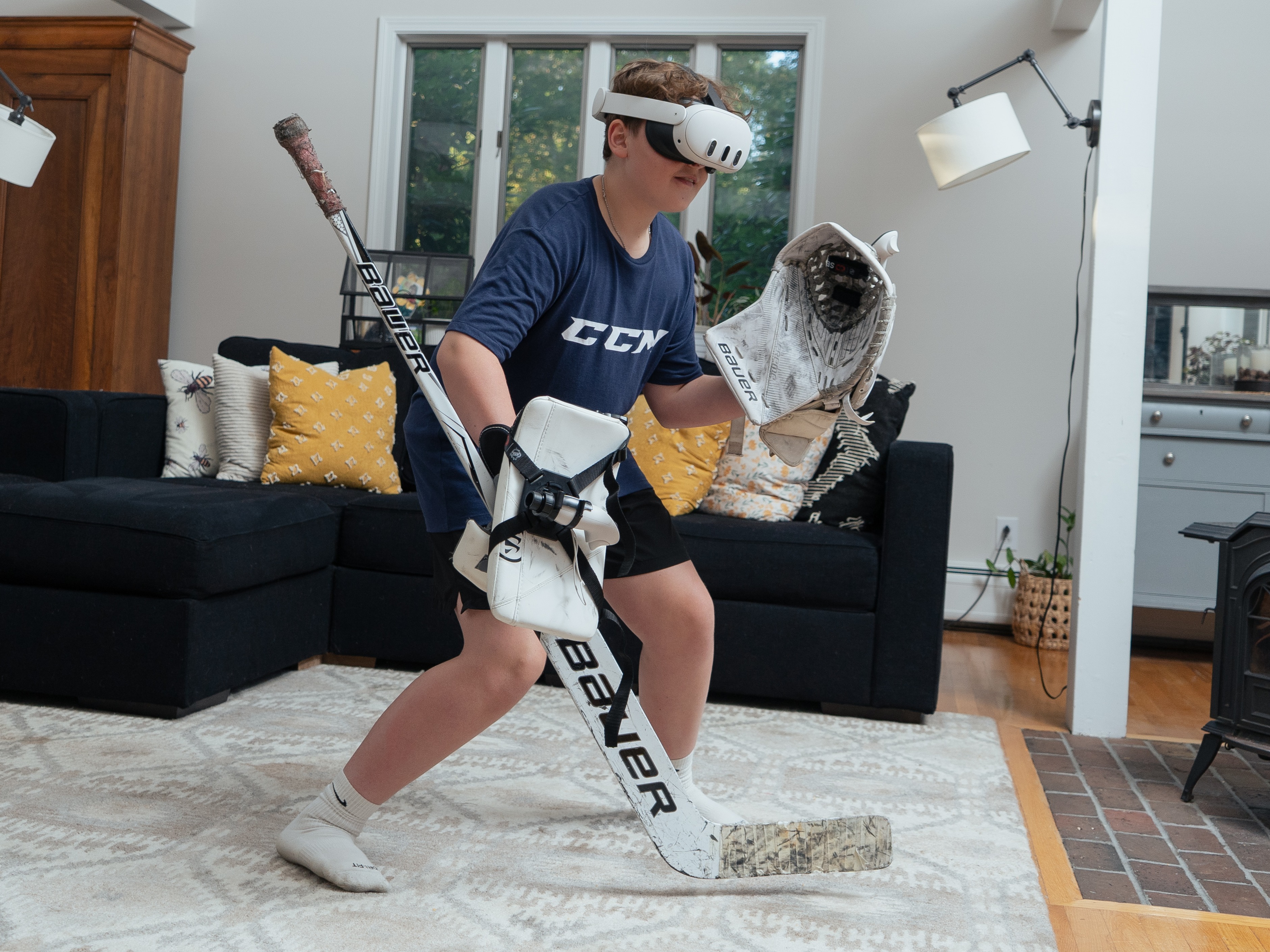
Rather than training one skill at a time, high-tech training systems like NHL Sense Arena allow for multiple aspects of the game to be built into every repetition. That way, players and goalies can work on several skills at once, including those hard-to-train hockey IQ abilities.
Within the virtual and mixed reality training, players can work on:
· Stickhandling with their head up
· Scanning the ice before receiving passes
· Decision-making under pressure
· Reading defenders
· Positioning and game awareness
· Reaction time
· Hockey-specific vision
While goalies train realistic reads, angles, traffic, rebounds, positioning, and release recognition, all without needing shooters, heavy equipment, or additional ice time.
Instead of replacing on-ice hockey, VR is designed to make every practice and game more productive by training hockey intelligence and awareness, not just isolated skills.
The Real Value: More Quality Reps, More Accessibility
The biggest obstacle for most hockey families isn’t motivation; it’s access and availability.
Extra ice time requires scheduling and open ice.
Private lessons require travel and coach availability
Camps only happen a few times each year.
Goalie training requires a shooter and training space
Even cognitive training has traditionally relied on a specialized gym
Home training tech and tools make it possible to practice consistently, even if you only have 10–20 minutes.
The key is to build a balanced training routine, with adjustments based on seasonality and availability:
In-season team practices for game experience
Occasional private coaching and camps for personalized feedback (especially for goalies)
Simple off-ice tools for shooting and puck handling, especially when weather is nice
Game-based cognitive training to improve hockey IQ and decision-making
Each training method serves a different purpose, and together they help players perform better when on the ice.
Which Hockey Training Investment Offers the Best Value?
There’s no single “best” hockey training tool, it all depends on what your goals are, where your player’s weaknesses lie, what stage of development they are in, and how the training tool fits into their overall routine. If your player wants to score more goals with a stronger shot, a shooting pad may be the right place to start. If your player is stuck, more personalized instruction via private coaching can be invaluable.
But if you’re looking for a way to add hundreds of game-like repetitions throughout the year, without booking ice, driving to the rink, or waiting for the next practice, a training platform like NHL Sense Arena offers one of the most accessible ways to replicate game-like scenarios to build hockey IQ, improve decision-making, and reinforce game habits from home.
The best hockey players don’t improve only during practice. They improve in the hours between practices. At-home training tools allow for that development by filling in the gaps, especially when ice time isn’t available. The most important consideration is to ensure players aren’t just working on one skill, while ignoring the others.
Key Questions About Home Hockey Training
Is home hockey training cheaper than private coaching?
In most cases, yes. While private coaching provides valuable one-on-one instruction, home training tools spread their cost across hundreds or even thousands of repetitions over time. Many families combine occasional coaching with consistent off-ice practice for the best overall value.
What hockey training equipment should I buy first?
It depends on your biggest area for improvement. Shooting pads are great for shooting practice, rebounders help develop passing and receiving, stickhandling trainers build puck control, and game-based training platforms like NHL Sense Arena help develop hockey IQ, awareness, and decision-making.
Can off-ice training replace on-ice hockey?
No. Off-ice training works best as a complement to on-ice practices and games. The goal is to reinforce skills, build consistency, and maximize development between ice sessions.
Is VR hockey training effective?
VR training can’t replace skating, but it can replicate many of the visual, cognitive, and decision-making demands of real hockey. Many players and goalies use NHL Sense Arena to train hockey IQ, positioning, reaction time, and game awareness when they’re away from the rink.