

10 Things Coaches Notice Immediately at Hockey Tryouts
Tryouts have a way of exposing everything.
The players who look great in games suddenly feel rushed. The kids who dominate stickhandling drills start forcing plays. Goalies who looked unbeatable during the season start second-guessing themselves. That’s because tryouts aren’t really about highlights. They’re about habits, consistency, and showing up with a complete skillset.
Coaches have seen thousands of players come through rinks. Within a few shifts they usually know who understands the game and who’s still figuring it out. It’s rarely the biggest shot or the fastest skater that stands out first. It’s the little things.
Here are ten things coaches tend to notice almost immediately during hockey tryouts.
1. Who Looks Comfortable With the Pace
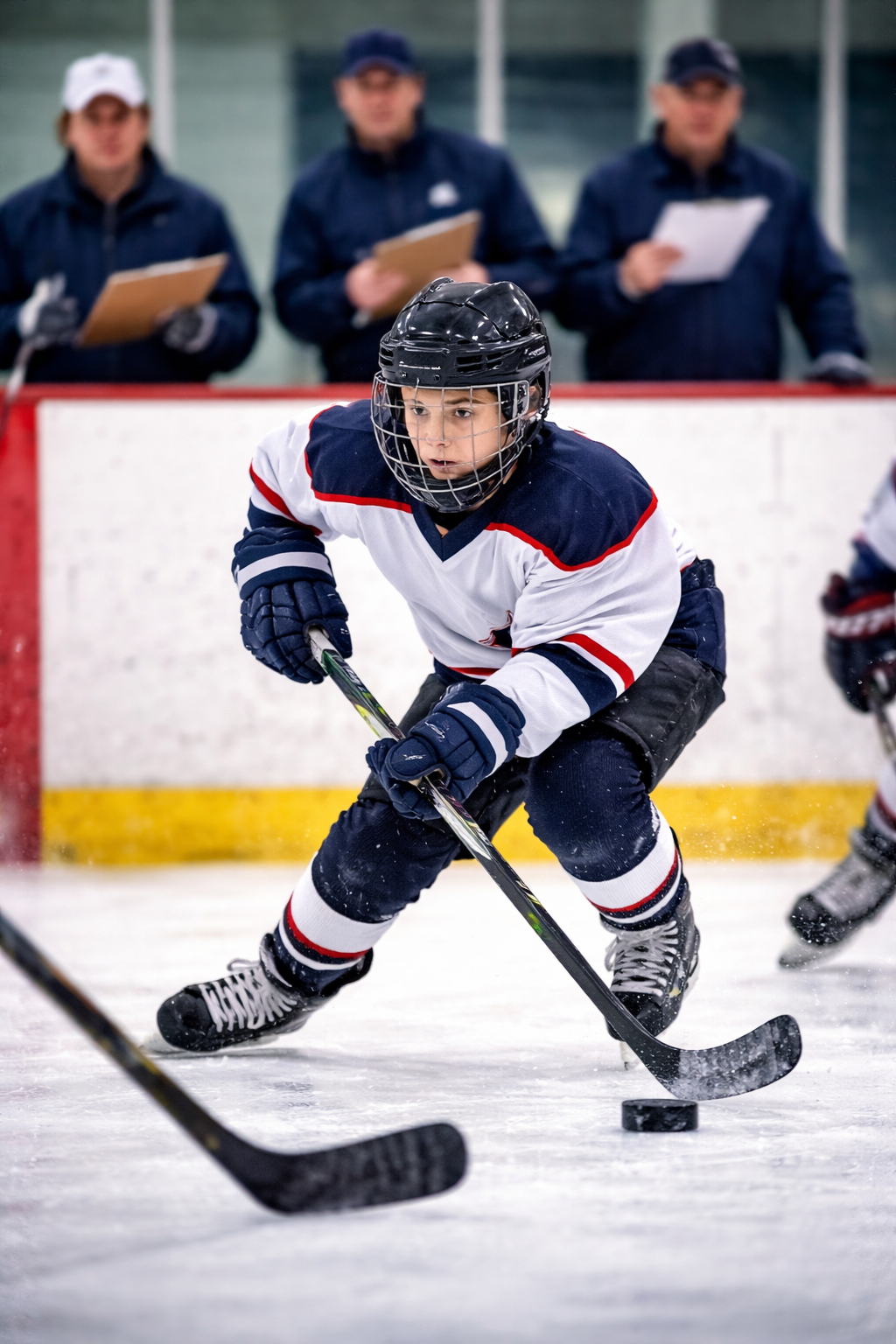
The first thing coaches notice is who looks calm.
The ice is full, drills are moving quickly, and everyone’s trying to impress. Some players start rushing the puck or panicking when pressure comes. Others look like they’ve been there before. They get the puck, take a look, and make a play. Nothing fancy. Just quick decisions and good awareness.
That kind of comfort usually comes from seeing a lot of situations before. More reps. More reads. More decision-making practice.
2. Who Scans the Ice Before the Puck Arrives
This one jumps out immediately. Good players check their shoulders before they receive the puck. They know where the pressure is coming from and where their next option might be.
Players who don’t scan the ice tend to panic when the puck touches their stick.
You’ll see them spin into trouble or throw blind passes because they’re reacting instead of anticipating. The best players look around before the play gets to them.
3. Who Makes the Simple Play
Tryouts are where players start trying to do too much. They want to dangle through three defenders or fire a shot from the blue line hoping something happens. Coaches almost always prefer the player who makes the simple play — quick pass, smart support, good positioning.
Hockey rewards players who move the puck quickly.
4. Who Can Handle the Puck Without Looking Down
Stickhandling drills are one thing. Handling the puck during a game while reading everything around you is another.
Players who keep their heads up and control the puck at the same time stand out quickly. It shows they’re comfortable enough with their hands that they don’t need to stare at the puck. Some players train that by adding visual pressure to their stickhandling reps, like the mixed-reality drills used in DanglePro, where you stickhandle a real puck while reacting to moving obstacles.
It forces players to handle the puck while paying attention to everything else happening around them.
5. Who Understands Space
Hockey is a game of space. Some players instinctively move into open ice, support teammates, and stay in good positions. Others drift around chasing the puck.
Coaches notice the difference almost immediately. Players who understand spacing make the game easier for everyone on the ice.
6. Who Stays Composed After a Mistake
Mistakes happen constantly during tryouts. A bad pass. A missed assignment. A soft goal.
What coaches watch next is how players react.
Some players spiral after a mistake. Others reset and keep playing. The ability to stay composed — especially in high-pressure situations — is one of the most underrated traits in young players. That’s why many athletes now work on the mental side of performance as much as the physical side, using mindset training tools to practice staying focused under pressure.
7. Which Goalies Are On Their Angles
For goalies, coaches often look at positioning before anything else. A goalie who consistently gets square to the puck and controls rebounds makes the game look calm. One who’s drifting around the crease or reacting late makes every shot feel dangerous.
A lot of modern goalie training focuses on reading releases and tracking plays early so the goalie is already set before the shot arrives. When a goalie looks controlled in the crease, coaches notice.
8. Who Hustles on Every Rep
This one sounds obvious, but it’s amazing how quickly players forget it during tryouts.
Drills end, players coast back to the line. Pucks get dumped in, and someone glides after it. Meanwhile there’s always one kid sprinting for everything. Coaches notice that player immediately. Effort still matters.
9. Who Communicates
Good teams talk. Players call for passes. Defensemen warn teammates about pressure. Centers help organize breakouts.
Communication is a simple thing that often separates players who are engaged in the game from those who are just reacting to it.
10. Who Looks Like They Understand the Game
This one is harder to describe, but coaches know it when they see it. The player who scans the ice. The player who moves the puck quickly. The player who seems to know where the play is going before it happens.
That’s hockey IQ.
And it’s one of the things that separates players who blend in at tryouts from the ones who stand out. Many players now train that side of the game off the ice as well, working through decision-making scenarios and awareness drills so the reads feel familiar when the puck drops.
You can see more examples of those types of training drills on the NHL Sense Arena YouTube channel.
Focus on what matters.
Tryouts will always be stressful. But players who skate hard, make smart decisions, and stay composed usually make coaches’ jobs easier.
And those players tend to stand out more than they think.