New Season, New Beginning: How to Start this Hockey Season on the Right Foot
The new hockey season is just getting started, and with it comes many additional beginnings: the start of a new school year, possible new teammates or coaches, new social pressures, and new opportunities for your young hockey player to develop their game.
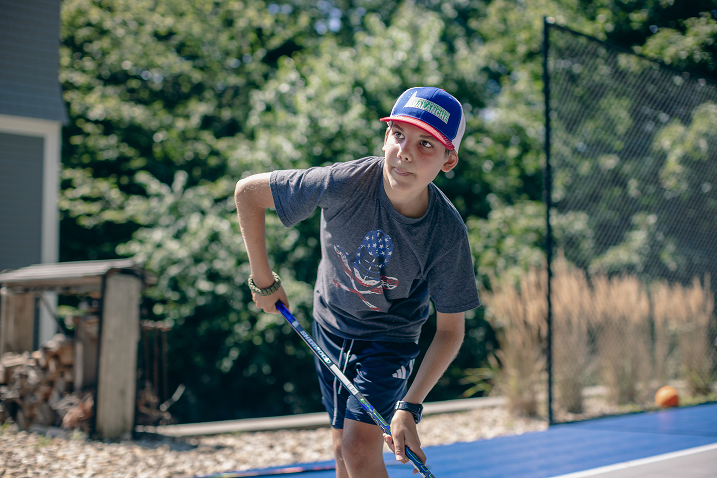
The reality is, hockey is just one component of a busy schedule that only gets busier heading into fall. While hockey players and their parents are focused on finding their new routines, they also face high expectations around their performance on and off the ice. But a successful season has to start somewhere, and some players enter the new season more prepared than others.
How do they do it?
First, they know it’s not about being perfect on day one. Instead, they come in prepared, confident, foundationally strong, ready to learn, and ready to work.
In the best cases, players will come in having put in some offseason training and staying active (depending on their age), but regardless of their offseason regimen, there are things parents can do to help any hockey player or goalie be better mentally and physically prepared for the long season.
1. Help Your Player Get Their Body Ready for Hockey Again
First and foremost, hockey is physically demanding, whether it’s the first practice or the last, and players starting back up don’t want to have to go from 0 to 100 MPH on day one. Building the right foundation is important, whether that means proper stretching and warm-up, proper sleep, recovery, nutrition, or conditioning work.
As the saying goes, “legs feed the wolf,” and as the season ramps up, helping your player rebuild their conditioning and leg strength can make the transition back to hockey much easier. Depending on their age, your player may want to find time to include leg and core training such as squats and deadlifts, as well as cardio conditioning exercises like running, hill sprints, biking, or brisk walks. Anything to get the lungs pumping and the legs working will help build a stronger hockey player.
The goal isn’t to be in peak mid-season form; it’s simply to start the motor back up after a long offseason, replicate some of the physical demands that practices or games may present, and create a baseline from which to grow.
Note: Please consult a parent, coach, or certified trainer when considering and deciding on off-ice training.
2. Get Your Player’s Hockey Brain Back in the Game
If your player’s body is the most obvious area of focus heading into the new season, their mind is probably the least considered aspect of their hockey game, and the last to catch up to game speed.
But this doesn’t have to be the case.
Players can begin the hockey season with their hockey brain firing on all cylinders with short, targeted brain exercises and drills that remind their eyes, mind, hands, and nerves what it’s like to make snap decisions. Without these types of reps, even if their body feels prepared, they may begin the season sluggish and behind because their decision-making is slow.
Using NHL Sense Arena drills, players can specifically practice skills that develop hockey IQ. Things like scanning, anticipation, reading the play, making quick decisions, puck releases, reflexes, and more. Whether it’s completing a couple of cognitive drills per day, working through a preseason training plan, going through the Player Advancement or Goalie Advancement programs, or just using pre-game warm-ups before hitting the ice, Sense Arena’s VR and MR drills are designed to get your player’s hockey brain firing, so they start ready and not rusty.
Just make sure not to leave the hockey brain behind when the season begins.
3. Use the Off-Ice Time You Actually Have
Hockey isn’t the only thing that starts back up in the fall. Players and parents are often faced with a multitude of other activities, be they school, clubs, other sports, or work. Suddenly, time disappears quickly, leaving players with even less off-ice time to work on deficiencies and preparation. But that doesn’t mean you have to neglect preparation altogether.
Building in 10–15 minutes per day to focus on off-ice activities like cognitive training, stickhandling, or shooting will pay dividends as the season ramps up.
The objective is not just to go through the motions, but to try and replicate game-like speed and scenarios as much as possible off the ice in a short period of time. This may mean combining as many elements of practice as possible, like stickhandling with anticipation and decision-making, cognitive drills with scanning and game reads, or puck control with body movement and vision work. Be creative with it, try new drills and exercises, and have fun.
With NHL Sense Arena’s “Back to Hockey Month” training, including “Pro Training Camp” training plans, players can jump between NHL Pro VR drills, DanglePro full-ice scanning activities, competitive drills, and more to get tuned up in ever-changing, fun, and exciting ways.
4. Help Your Player Prepare Their Mindset for the Season
Hockey IQ is one thing, but mindset is completely different and just as important.
A hockey player should come into the new season confident, positive, relaxed, focused, and goal-oriented. Regardless of team situations, new-season pressures, expectations, or tryouts, every player deserves to start the year excited about the possibilities to come. But even this requires some work.
One of the most helpful things parents can do is encourage their players to focus on what can be controlled, such as attitude, effort, communication, compete level, and preparation, while minimizing things like comparisons, parent/coach expectations, or team decisions.
When going into the first weeks of practices or games, a positive mindset framework means thinking about things like “How can I be the best version of myself today?”, visualizing a successful shift, repeating positive affirmations, or reframing stressors into positive motivators.
A positive mindset will create positive energy. It’s all about the intentional process to get there.
5. Start the Season Ready, Not Perfect
No hockey player will start the season perfect. There will be mistakes. Practices will be hard. There will be ups and downs.
The first few weeks are all about learning, developing, and building that foundation for a successful season. This may include reflecting on things like:
What am I doing well?
What do I need to improve?
What am I seeing on the ice?
What decisions am I making?
What can I learn from mistakes?
Parents should also consider their role in the new season, making sure to refrain from adding unnecessary pressure while so many other pressures are already adding up. Parents, instead, can:
Ask “What did you learn today?” rather than only “How did you play?”
Focus on effort, growth, and enjoyment.
Give coaches room to coach.
Remember, the season isn't won in September. It's about building habits that compound over the next several months.
Your Hockey Season “Starting Strong” Checklist
Before the first puck drops:
BODY: Help your player get moving, build strength, and prioritize sleep and recovery.
SKILLS: Get their hands, shot, and puck control back into rhythm.
BRAIN: Give them opportunities to practice scanning, reactions, decision-making, and hockey IQ.
MINDSET: Encourage them to focus on what they can control and not be afraid to make mistakes.
ROUTINE: Find small, consistent pockets of time for training around school, hockey, and other activities.
ATTITUDE: Help them start the season ready to compete, learn, and have fun.